 KH
KH  FR
FR  AR
AR CN
CNCambodia Rejects Claims That Cultural Heritage Sites Were Used for Military Purposes
AKP Phnom Penh, September 15, 2026 -- The Ministry of Culture and Fine Arts has firmly rejected allegations by Thai authorities that Cambodia has used ancient temple sites for military purposes, describing the claims as unfounded attempts to distort information and deflect responsibility for damage to cultural heritage.
The following is the Ministry’s full statement issued on Sept. 15:
“The Ministry of Culture and Fine Arts firmly rejects once again the unfounded allegations and claims recently made by relevant Thai authorities, particularly statements by Mr. Prapas Sonjaidee, Director of the Thai-Cambodian Situation Information Centre (JIC), and Mr. Phanombut Chantharachote, Director-General of the Thai Fine Arts Department, alleging that Cambodia has used ancient temple sites for military purposes. The Ministry of Culture and Fine Arts further considers these statements to constitute deliberate attempts to distort information, deflect responsibility for the destruction and damage of cultural heritage, and disseminate inaccurate information in a manner that could mislead the public.
The Ministry of Culture and Fine Arts reaffirms the following facts:
1. As a country with a rich civilisation, culture and history, and as a State Party to the 1954 Hague Convention and its two Protocols, as well as the 1972 UNESCO Convention, Cambodia has demonstrated its strong commitment and responsibility to the protection and preservation of cultural heritage. All heritage sites throughout the country are accorded the highest priority for conservation, enhancement of their values, research, education, religious activities, tourism and international cooperation. Cambodia has never attacked any cultural heritage site, and no cultural heritage site within Cambodia has ever been used as a military base.
2. In contrast, Thailand's acts of aggression against Cambodia have caused the destruction and damage of ancient temples and other cultural heritage sites within Cambodian territory. These include the Temple of Preah Vihear, the Temple of Ta Moan Thom, the Temple of Ta Krabey, Spean Toap, located approximately 70 kilometres from the Cambodia-Thailand border, and several other archaeological sites.
To date, certain cultural heritage sites, including Ta Moan Thom, Ta Krabey and K'nar, remain illegally occupied by Thailand, which is attempting to create a fait accompli on the ground, including through the establishment of a purported legal framework aimed at asserting claims over these sites. Furthermore, a number of archaeological objects from K'nar Temple have been illegally removed by Thai authorities and taken to Thailand.
In this regard, Cambodia categorically opposes Thailand's unilateral activities at Ta Moan Thom, Ta Krabey and K'nar Temples, including the construction of infrastructure and electricity networks, the organisation of tourism and religious activities, and restoration projects undertaken without Cambodia's authorization. Such activities constitute attempts to consolidate an unlawful occupation and are contrary to international law.
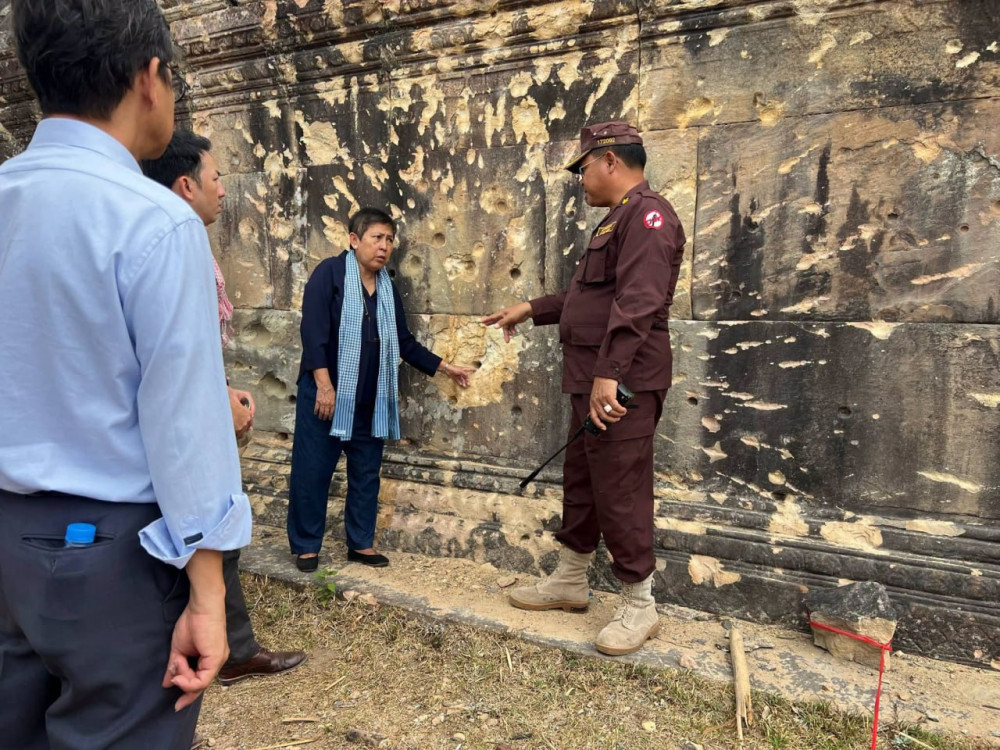
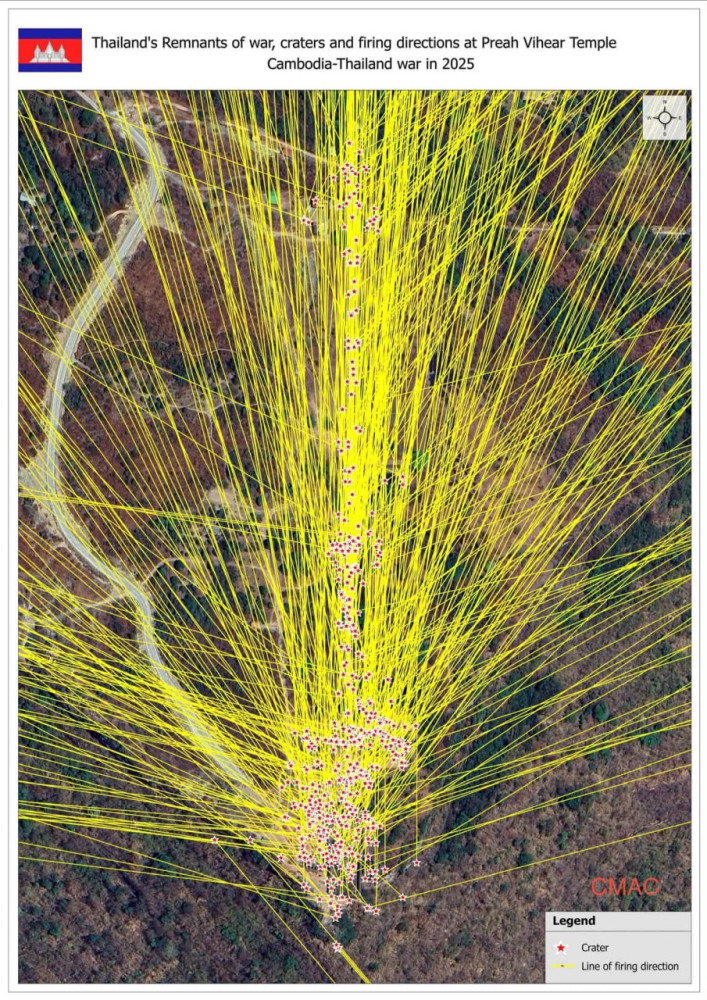
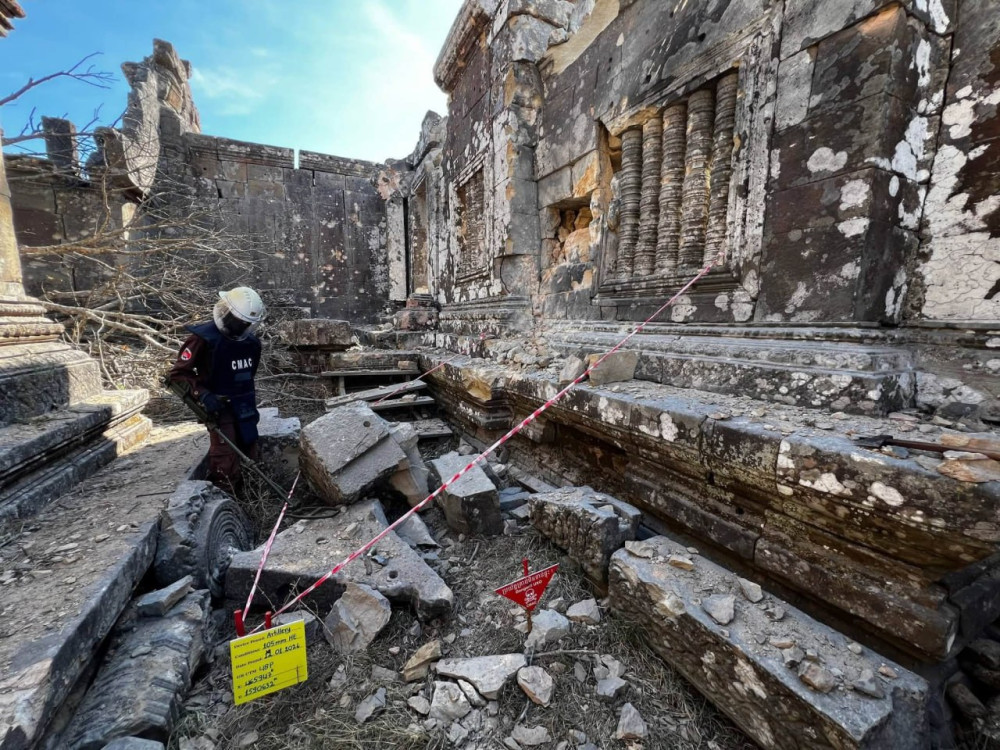
3. The tragic attacks by the Thai military on the Temple of Preah Vihear in July and December 2025 caused extensive damage, affecting a total of 562 locations and reducing temple stones to more than 70,000 fragments. Thailand's indiscriminate shelling destroyed much of the results of more than ten years of restoration and conservation efforts undertaken by national and international institutions at the Temple of Preah Vihear, as well as public infrastructure, and forced more than 16,000 people to evacuate from the heritage area. Some residents have still been unable to return to their homes due to continuing security and safety concerns.
The damage to the Temple of Preah Vihear has been documented and confirmed in reports issued by national and international cultural experts.
4. The Temple of Preah Vihear, a World Heritage property, is a sacred site for the Cambodian people. It is a place where Cambodian national authorities and international partners cooperate closely in conservation; a site for archaeological study and research; a place of education; a site for traditional Cambodian religious worship; and a destination that welcomes national and international tourists. This has included Thai visitors, who have visited the Temple of Preah Vihear and have clearly seen for themselves that the temple is a cultural and religious heritage site, not a military site.
Therefore:
First, Cambodia reiterates its condemnation of the unlawful occupation by forces, administration and control of Cambodian cultural heritage sites and urges Thailand to withdraw its troops from these areas, particularly those currently stationed at Ta Moan Thom, Ta Krabey and K'nar Temples.
Second, Cambodia calls for the immediate return of the archaeological objects removed from K'nar Temple and taken to Thailand.
Third, Cambodia calls upon the Thai side to respect international law, international treaties and conventions, and to cease its attempts to consolidate and render permanent its occupation of Cambodian sovereign territory. Cambodia urges that outstanding issues be resolved peacefully through the existing bilateral mechanisms, particularly the Joint Boundary Commission (JBC).
Finally, Cambodia reaffirms that its cultural heritage sites are not military bases and must never be used for military purposes. Cambodia will continue to accord the highest priority to the conservation and preservation of its cultural heritage for the benefit of future generations and as part of the shared heritage of humanity.
Cambodia therefore categorically condemns any shelling or other acts resulting in the damage or destruction of ancient temples and other cultural heritage sites, which constitute violations of international law and undermine the protection of cultural heritage.”
By C. Nika