 KH
KH  FR
FR  AR
AR CN
CNCambodia Calls on Thailand to Withdraw Forces and Return Occupied Cambodian Territory
AKP Phnom Penh, August 26, 2026 --
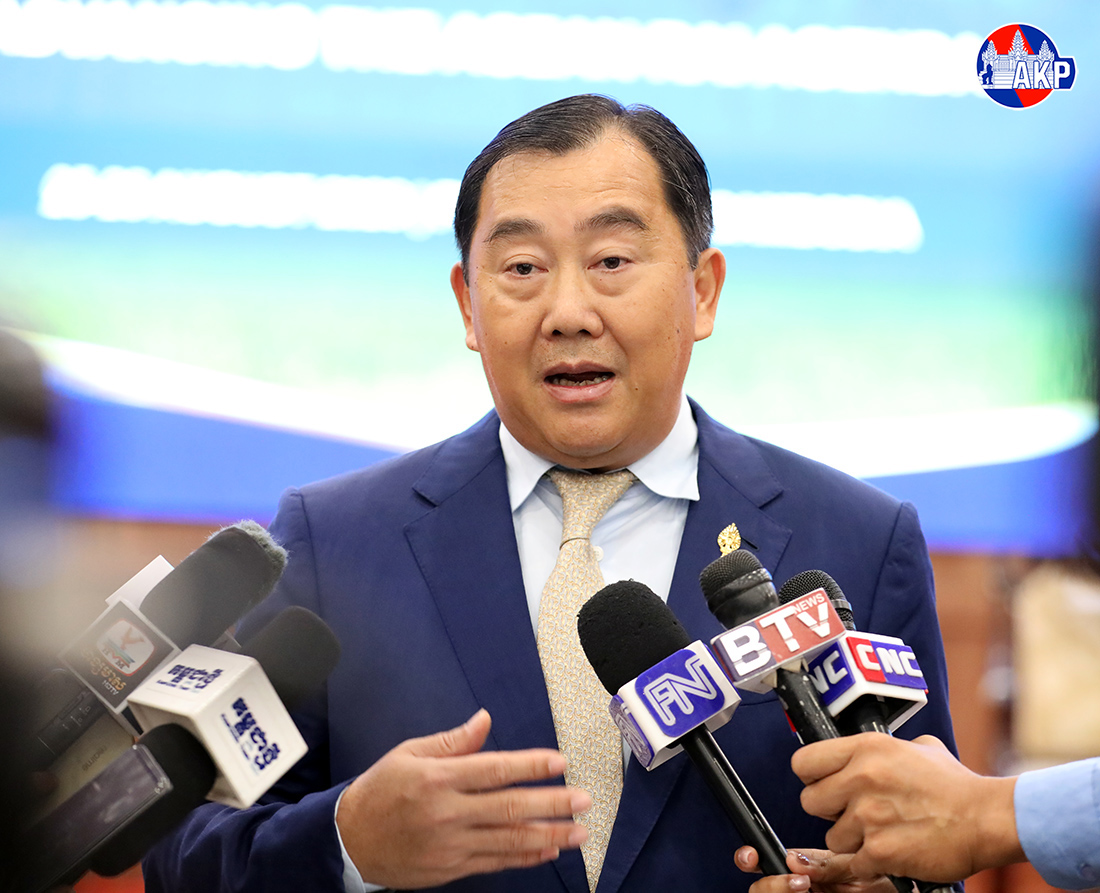
Cambodian Minister of Information H.E. Neth Pheaktra has called on Thailand to withdraw its forces and military assets from Cambodian territory and allow displaced Cambodian civilians to return safely to their homes, saying that claims of non-aggression must be demonstrated through actions rather than statements.
In a Facebook post on Aug. 26, the Minister said Thailand’s Joint Information Centre (JIC) could not erase evidence of Thai military actions on Cambodian soil through denials or competing narratives.
He recalled that the conflicts in July and December 2025 resulted in loss of life, destruction of homes, pagodas and infrastructure, and the displacement of approximately 650,000 Cambodian civilians. Around 20,000 displaced people remain unable to safely return to their homes and land, despite the commitment made under the Dec. 27, 2025 Joint Statement.
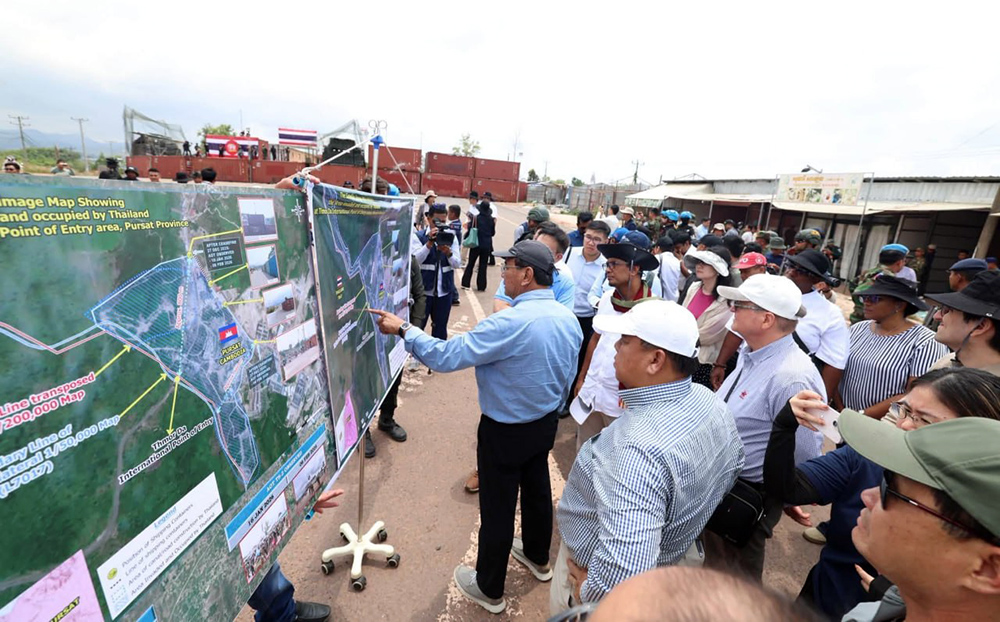
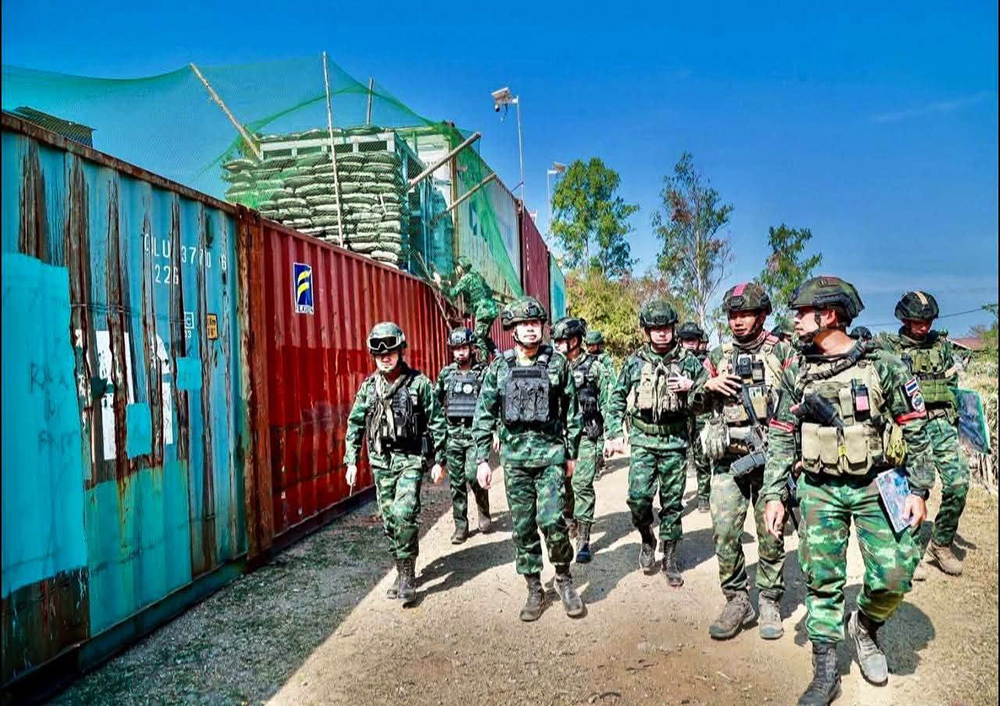
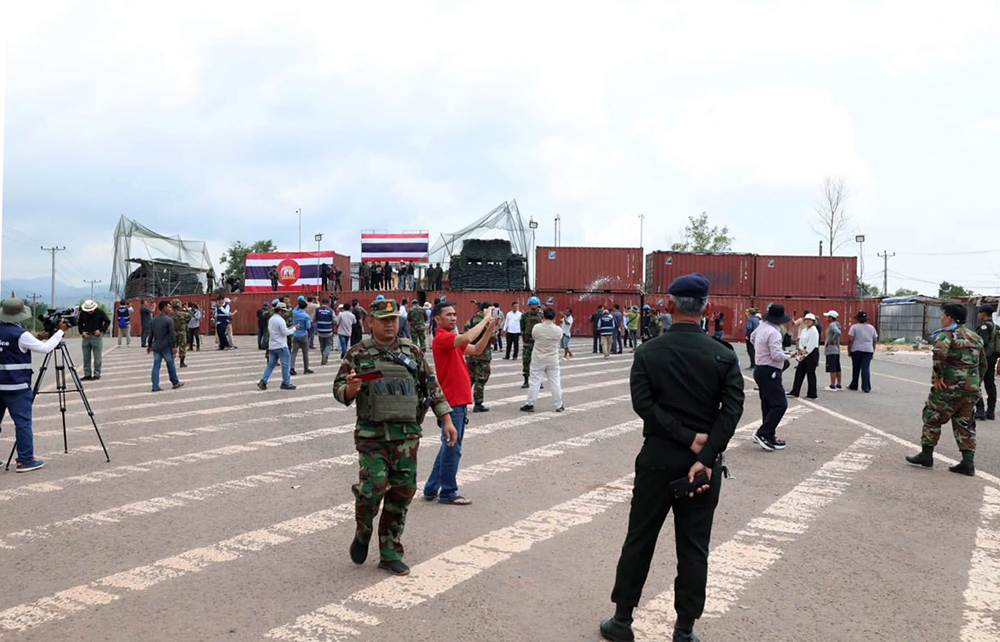
According to H.E. Neth Pheaktra, the situation remains unresolved, with shipping containers, barbed wire, barriers, military positions, trenches and newly constructed roads still altering the situation on the ground and preventing some civilians from returning.
He questioned why Thai forces and military assets remain at locations on Cambodian territory and why such measures have been taken if Thailand has no intention of occupying Cambodian land.
“Guns are not instruments of border demarcation. Shipping containers are not boundary pillars. Barbed wire is not an international boundary. And occupation by force is not evidence of sovereignty,” he said.
The Minister stressed that Cambodia supports resolving outstanding border issues through mechanisms agreed upon by both countries, particularly the Cambodia-Thailand Joint Boundary Commission (JBC). He called on Thailand to respond constructively to Cambodia’s JBC proposals so that joint survey and demarcation work can resume within the existing legal and bilateral framework.
He also emphasised that the Dec. 27 Joint Statement does not transfer sovereignty or recognise any new international boundary, but was intended to end violence, preserve peace and create conditions for displaced civilians to return safely to their homes.
“A ceasefire stops the shooting; it does not redraw the map,” he said. “A ceasefire freezes the military situation; it does not transfer sovereignty.”
H.E. Neth Pheaktra further stressed that effective control achieved through force is distinct from lawful sovereignty, adding that the deployment of troops, planting of flags, installation of barriers, digging of trenches or construction of infrastructure cannot create lawful sovereign title over another state’s territory.
He therefore called on Thailand to withdraw its forces and military assets, remove obstacles preventing Cambodian civilians from returning, cease actions aimed at creating a fait accompli, and leave border survey and demarcation to the JBC in accordance with international law, applicable maps and existing agreements.
“If Thailand does not seek Cambodian territory, then it should return to Cambodia what belongs to Cambodia,” the Minister said, stressing that the issue should be addressed through facts, law, sovereignty and territorial integrity rather than competing narratives.
He concluded that if Thailand maintains it has not committed aggression against Cambodia, it should demonstrate this through concrete actions by withdrawing its forces, ending efforts to create a fait accompli, allowing Cambodian civilians to return home and returning Cambodian territory it is allegedly occupying.
By C. Nika